Key Takeaways
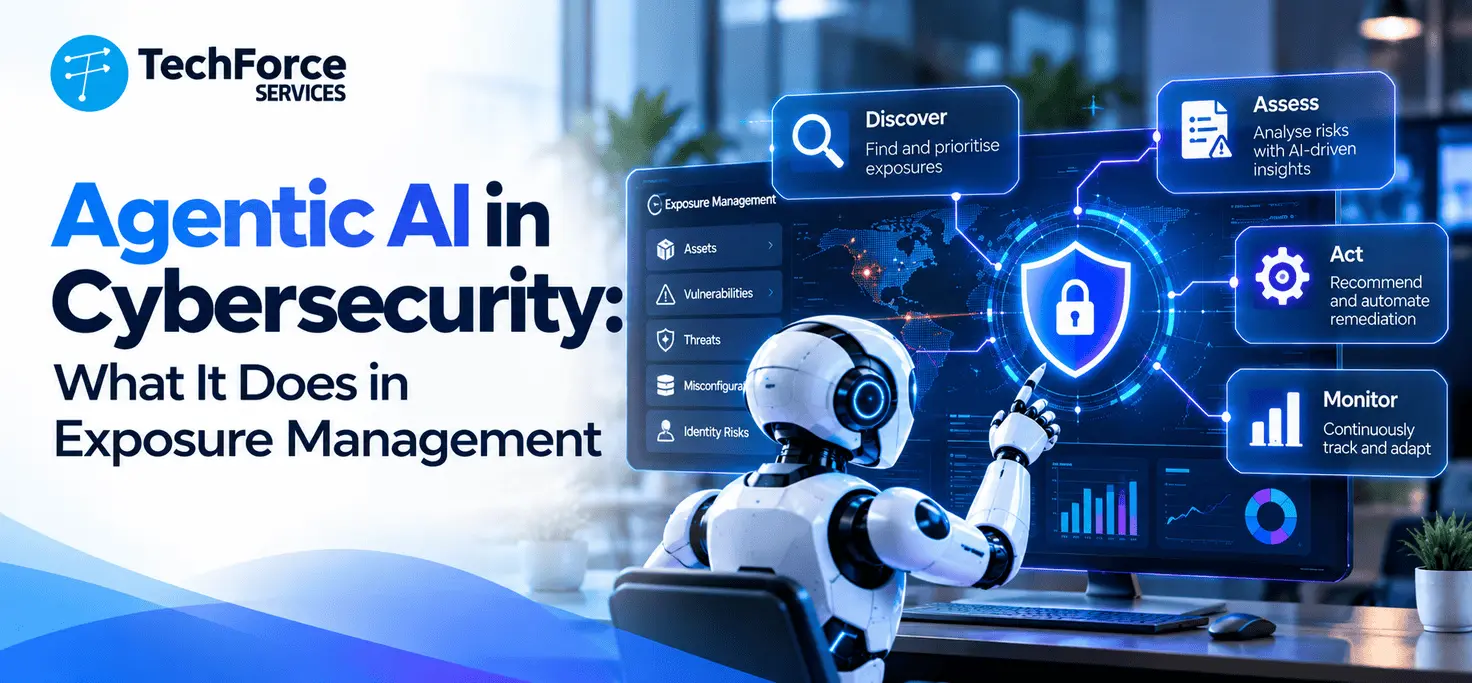
- Agentic AI in cybersecurity refers to AI that plans, acts, and learns across multiple steps on its own, not a chatbot or a simple automation script. It helps with a security goal continuously without needing to be told each step, working on each step throughout.
- In continuous threat exposure management (CTEM), agentic AI changes what happens across all five stages; it helps across all five stages of CTEM, from scanning the attack surface to automatically routing a fix to the right team.
- 48% of cybersecurity professionals now identify agentic AI and autonomous systems as the top attack vector heading into 2026. The same technology that attackers use can be deployed in your defense.
- Gartner projects 40% of enterprise applications will integrate task-specific AI agents by the end of 2026, up from under 5% in 2025, but only 6% of organizations report having an advanced AI security strategy.
- TechForce Services, in partnership with Gambit Cyber, delivers an AI-native CTEM program through KnightGuard; KnightGuard is a platform built for exposure management.
Security teams face a problem that has been increasing at pace in recent years. It’s that the volume of alerts, vulnerabilities, misconfigurations, and threat signals they need to process every day has increased far beyond what any human team can handle or keep pace with. At the same time, the consequences of missing one important exploitable path an attacker is already testing have been higher.
So if any security team needs to keep pace with the threats, alerts, or exposure, Agentic AI in cybersecurity is the direct solution to that problem. It’s because while traditional tools alert and wait, agentic AI acts through stages of CTEM; it scans, analyzes, correlates, prioritizes, validates, and routes to the right team. And it all happens without a person initiating each step.
This article explains what agentic AI actually does in a continuous threat exposure management program, how it maps onto each of the five CTEM stages, where people still need to be in the loop, and how TechForce Services and Gambit Cyber deliver this in practice through the KnightGuard platform.
New to CTEM? Start with: What Is Continuous Threat Exposure Management (CTEM)?
What Is Agentic AI in Cybersecurity?
Before getting into how it applies to exposure management specifically, it’s worth knowing what agentic AI in cybersecurity actually means, because the term is being applied to everything from basic automation to genuinely autonomous security systems. So knowing it and how it functions will help you understand how it actually works in practice.
An AI agent is software that:
- Takes a goal from the user as an input, rather than a single question or prompt.
- Makes a plan to achieve that goal across multiple steps within the system.
- It uses tools such as databases, scanners, APIs, and ticketing systems to begin working and finish each step as required.
- It reviews the results and adjusts accordingly to achieve the target goal.
- It continues until the goal is reached or it escalates to a person who can help fix it.
It works differently than a chatbot, which answers the specific questions users ask. Agentic security applies this to the full security lifecycle: finding exposures, validating them, prioritizing by real-world risk, and moving fixes into production without a person having to look out the process from stage to stage.
Gartner named agentic AI oversight the number-one cybersecurity trend for 2026 and predicts that over 75% of enterprises will use AI-amplified cybersecurity products by 2028, up from less than 25% in 2025.
Why Exposure Management Specifically Needs Agentic AI?
Traditional vulnerability management produces long lists of alerts, vulnerabilities, or threats. CTEM’s overall goal is to turn those lists into a continuous, prioritized, validated program of action that helps the organization’s security team know and fix what’s actually exploitable rather than fixing every alert.
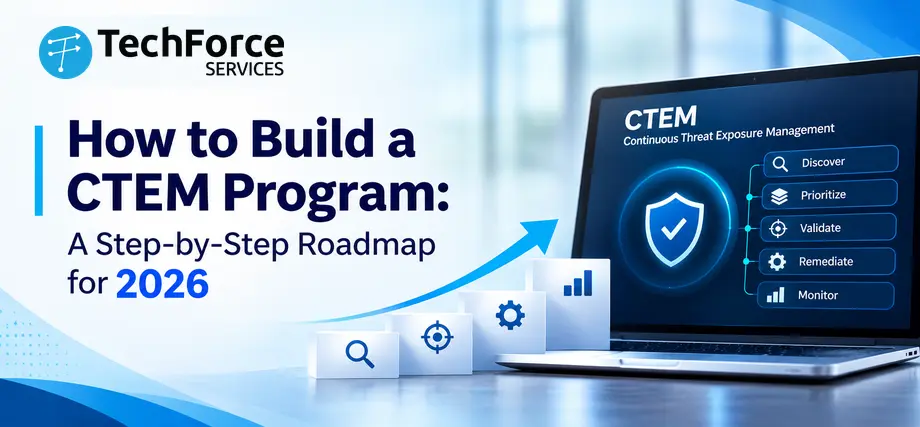
CTEM runs through five stages: Scoping, Discovery, Prioritization, Validation, and Mobilization on a continuous basis across a growing attack surface, requiring more analyst time than most teams have.
This is exactly the gap agentic AI exposure management fills. Each stage of CTEM involves repeated, structured analysis that is well-suited to agents: querying data, applying context, comparing results, and routing findings.
And the important decision that carries real risk, such as what scope to approve, what risk to accept, and whether to push a change to production, stays with people.
Agentic AI Across the Five CTEM Stages
Stage 1: Scoping; Knowing What Actually Matters
This is the first step of CTEM, and it’s where most security programs quietly fail. Without agentic agents, scoping relies on someone manually updating asset inventories, deciding which systems are business-critical, and cross-referencing that against current threat intelligence. It happens occasionally, not continuously.
And with agentic AI, scoping becomes a live, self-updating process that continuously scopes/pulls threats or vulnerabilities from the discovery tools, threat intelligence feeds, and business context. It also flags whenever a previously low-priority asset gets connected to a critical process. It’s not a static document but a maintained, continuous process stage.
Stage 2: Discovery; Finding What's Actually Exposed
At the discovery stage, most security teams typically scan for vulnerabilities, but Agentic AI goes beyond CVE scanning.
Discovery agents in CTEM can do these to find out what’s actually exposed and a threat to the business:
- It scans the external attack surface for exposed ports, misconfigured services, and leaked credentials.
- It can pull vulnerability data from existing scanners and normalize it across formats.
- It can cross-reference with threat intelligence to flag active exploitation.
- It can surface misconfigurations in cloud infrastructure and identity systems.
- It can detect new shadow assets that weren’t in the approved inventory.
The key difference between traditional vulnerability scanning and discovery agents in CTEM is the continuous process. Discovery agents run all the time, not just quarterly. So any new vulnerability is discovered and fixed within 48 hours; the continuously running cycle surfaces it before any scan does notice.
Stage 3: Prioritization; What to Fix First
This is where agentic AI for threat detection and exposure management most directly overlap and where agents deliver the clearest value.
Traditional vulnerability management ranks by CVSS score: a fixed, generic severity score doesn’t actually tell asset criticality or whether an attacker is actually using this flaw right now.
Agentic prioritization combines these to give better prioritization of what is important for the organization and needs to be fixed first:
- Exploit likelihood (e.g., EPSS: the Exploit Prediction Scoring System).
- Active exploitation data from threat intelligence feeds.
- Asset importance to the business (pulled from CMDB or defined in the platform).
- Internet exposure: Is this reachable from outside?.
- Existing compensating controls.
- Attack path analysis: Can this flaw actually be reached from a realistic entry point?
The output given at this stage is a short but business-relevant list. It gives security teams an exposure list that a real attacker could actually use against a system that would harm the organization or any system within.
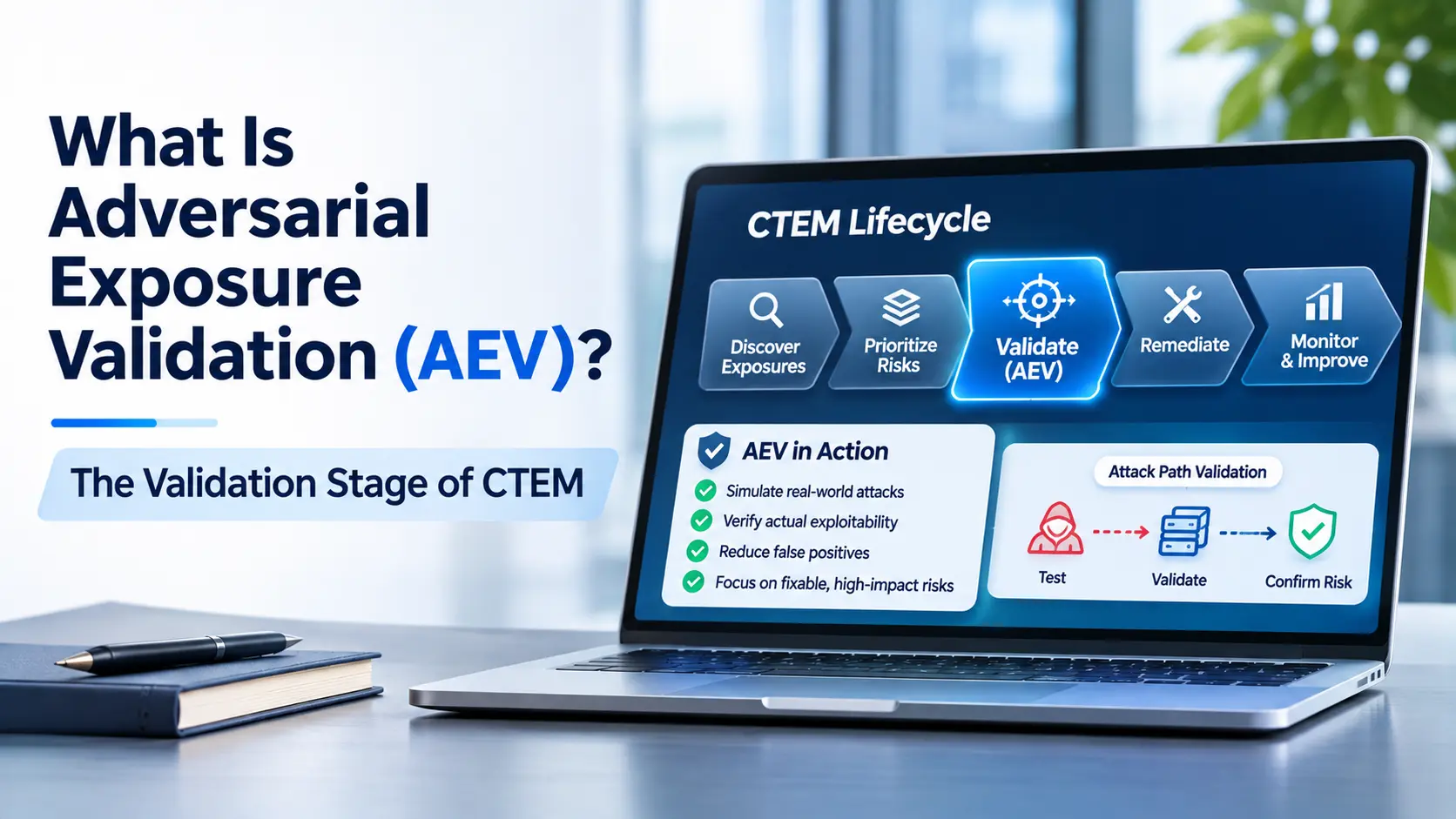
Stage 4: Validation; Proving It's Real
Validation is the stage most programs skip entirely. They prioritize based on theoretical risk and send findings straight to the queue, without ever confirming that the vulnerability is actually exploitable in this environment.
Agentic AI enables continuous, safe validation at scale. Agents can simulate real-world attack techniques to test whether a vulnerability is reachable, whether an attack path can be traversed, and whether existing controls actually stop it. It all happens without the cost and scheduling of a manual testing environment. This is also called Adversarial Exposure Validation (AEV) or breach and attack simulation.
So, if your security team has limited capacity, it helps them to utilize the cost in actually fixing, not just finding.
Stage 5: Mobilization; Getting Fixes Across the Line
Mobilization is consistently where exposure management programs stall. Most of the time, the findings are ready with clear priority, but getting IT operations, application owners, and business partners to actually act requires coordination across teams.
This is where security workflow automation through agentic AI helps a lot. The agent can help me in several ways:
- It can open tickets in the right system (Jira, ServiceNow, or similar), pre-populated with the validated finding, the evidence, and the recommended fix.
- It can route each ticket to the correct asset owner based on CMDB data.
- It can follow up automatically when tickets age past defined SLAs.
- It can retest the exposure after the fix is marked complete.
- It can report on time-to-fix and reduction in confirmed exposure over time.
The mobilization agent doesn’t fix the vulnerability but helps remove the manual coordination and bring on smooth coordination between teams.
Download our whitepaper to discover how to pressure-test your security posture using real-world cyberattacks: The Security Validation Playbook
What Still Needs a Human
It’s important to be clear about what agents don’t do and shouldn’t do autonomously. A human is still needed to look out for the critical phase.
Here is a list of why humans are needed even if it’s a continuous process with everything in line:
- Approving changes to production: Deploying a patch or changing a firewall rule in a live environment should have a human sign-off before the agent acts.
- Accepting risk: Deciding that an exposure is acceptable to leave open is a business decision, not a technical one, so a human must do it.
- Defining scope: Agents maintain scope; people set the strategic priorities that scope reflects.
- Investigating novel threats: Agents excel at pattern recognition and known-path analysis. A genuinely novel attack technique may require human investigation before the agent has a model to follow.
- Governance and oversight: Every agent action should be logged, auditable, and reviewable. The people responsible for security remain responsible, even when agents are doing the work.
The goal of autonomous security operations isn’t to remove people from the loop; it’s to remove the repetitive analysis that currently consumes most of a security team’s time so that people can focus on judgment calls, investigations, and strategic decisions.
How TechForce Services and Gambit Cyber Deliver AI-Native CTEM
TechForce Services partners with Gambit Cyber to deliver managed CTEM programs through KnightGuard: Gambit’s AI-native exposure management platform built specifically for continuous, preemptive cyber risk reduction.
Most security platforms add AI to an existing product, but KnightGuard was built from the ground up to be AI-native, risk-centric, and preemptive. It uses a coordinated process of specialized AI agents to run the full CTEM cycle continuously: identifying exposures, validating them against real threat intelligence, and mobilizing remediation without waiting for a quarterly scan or a manual review cycle to catch what’s already changed.
What are Gambit Cyber KnightGuard's Unified Platform Capabilities?
KnightGuard brings multiple security functions into a single platform that includes:
- Attack Surface Management: Continuous visibility into external, cloud, and dark web exposure.
- Threat Surface Management: Threat-informed scoping based on what attackers are actually targeting.
- Vulnerability Scanning: Integrated, normalized scanning across environments.
- Threat Intelligence Operationalization: Bring your own threat intel feeds, or use Gambit’s.
- Threat Hunting and Detection Analytics: Purpose-built AI detection agents for SOC and SecOps teams.
- Purple Teaming and Breach Attack Emulation: Adversarial validation of defensive controls.
- Controls Prioritization and Remediation: AI-generated playbooks tied to confirmed exposures.
- Risk Profiling: Continuous, business-aligned risk scoring for CISO reporting
Who This Is For
AI-native CTEM through KnightGuard is best suited for organizations:
- Those who have grown beyond what periodic vulnerability scanning can help them with.
- Organizations that have a security team that is focusing on too many alerts and too little time for investigation.
- Enterprise organizations that are under regulatory pressure (financial services under DORA or CPS 234, healthcare under HIPAA, or government under essential security controls) to demonstrate continuous risk reduction rather than point-in-time compliance.
- Who wants to prove to board partners that security investment is reducing real, measurable exposure, not just generating a longer list of findings?
- Who are ready to adopt AI in their operations and want their security program to match the pace of attackers with AI?
Conclusion
gentic AI in cybersecurity isn’t a future capability; it’s already running and useful for many organizations. The security teams that are benefiting most are those that have connected it to a framework/program: specifically, Gartner’s continuous threat exposure management model (CTEM). CTEM provides the structure with different stages that agentic AI needs to produce a security outcome.
Security workflow automation through agents does scanning continuously, prioritizing by real-world exploitability, validating, and routing fixes to the right owner automatically.
Agentic AI exposure management closes the gap between traditional vulnerability programs and the CTEM programs by making the five-stage CTEM cycle operational and by giving cyber risk management a chance to match with the threat exposures rather than making it a scheduled assessment.
TechForce Services and Gambit Cyber deliver this together through KnightGuard’s AI-native CTEM platform and Vizier AI’s autonomous security intelligence layer, with the program-delivery governance to make sure it actually runs as a continuous program rather than a one-time project.
If you’re ready to see what this looks like for your organization, get in touch with TechForce Services for a scoped conversation.

Frequently Asked Questions
What is agentic AI in cybersecurity?
Agentic AI in cybersecurity is AI software that pursues a security goal across multiple steps without being told each step: it plans, uses tools, checks results, and adjusts. Agentic AI in cybersecurity includes agents that investigate alerts, scan attack surfaces, validate vulnerabilities, and route remediation tickets, and they perform a continuous cycle of each step rather than waiting to be triggered.
How is agentic AI different from SOAR or standard automation?
SOAR playbooks follow fixed steps written by a person. If something unexpected happens, they stop or fail. Agentic AI plans the steps itself, can adjust when something unexpected appears, and can handle tasks that weren’t specifically scripted. Both have a place, but agents are better suited for work that requires judgment across variable data.
What is AI-native CTEM?
AI-native CTEM refers to a continuous threat exposure management platform built around AI agents from the start, not a traditional scanner or SIEM with an AI layer added later. The difference between the two matters because AI-native architecture allows agents to operate across the full CTEM cycle, rather than just assisting one stage.
What does KnightGuard cover?
KnightGuard is Gambit Cyber’s unified CTEM platform. It covers attack surface management, threat intelligence operationalization, vulnerability scanning, threat hunting and detection analytics, purple teaming and breach & attack emulation, controls prioritization, remediation playbooks, and risk profiling in a single platform rather than a collection of separate tools.
Is agentic AI the same as autonomous security operations?
Autonomous security operations is the broader outcome: it is a security program that runs continuously without manual hand-offs between every stage. Agentic AI is the technology that enables it. Not all autonomous security operations use agentic AI; some use simpler automation. Agentic AI is what allows the system to handle situations that weren’t specifically scripted.
How is agentic AI used in exposure management?
Agents contribute at every CTEM stage: maintaining live scope, running continuous discovery across external and cloud attack surfaces, prioritizing findings by real-world exploitability and business impact, validating whether exposures can actually be exploited, and routing remediation tickets with evidence attached. It is part of the CTEM program that runs continuously rather than in periodic assessment cycles.
How do I get started with AI-native CTEM?
The starting point is scoping to identify which part of your attack surface most urgently needs continuous coverage and what a first full CTEM cycle would look like for your organization. Contact TechForce Services for a scoped conversation or to book a KnightGuard demonstration.