Overview
- The CTEM framework is a repeating five-stage program that ranks exposures by business risk.
- Each of the CTEM stages has a clear question, owner and output you can assign today.
- Attack surface management, vulnerability management and security validation each feed a specific stage.
- Five common mistakes stall most programs, and each one is easy to avoid.
- A simple 30-day plan helps you launch your first cycle with confidence.
Quick answer: The CTEM framework is a five-stage program that helps security teams scope what matters, discover exposures, prioritise by real risk, validate what attackers can exploit, and mobilise fixes. Unlike a one-time scan, continuous threat exposure management runs as a loop, so every cycle makes your defenses measurably sharper.
Most teams already own plenty of scanners. What they lack is a way to decide which findings deserve attention first. This guide walks through each stage in plain language, so you can turn raw alerts into a practical plan that any CTEM security team can follow.
What Is CTEM?
Continuous threat exposure management (CTEM) is an operating model, not a product you can buy. It was introduced in 2022 to fix a simple problem: attack surfaces keep growing across cloud, SaaS, identities and suppliers, while patch lists keep getting longer. CTEM cybersecurity programs ask a sharper question: which exposures can really hurt the business? The CTEM framework answers it with a repeatable cycle. For a gentler primer, read our complete beginner’s guide.
Why the CTEM Framework Matters Now
Attackers take the easiest path, not the loudest alert. A leaked credential, an exposed test server or an over-permissioned account can matter more than a headline vulnerability, yet traditional reports rarely show those links. This approach joins them into one view, so leaders can see which risks threaten revenue, customers or uptime. That clarity helps every CTEM security team explain risk in business terms, which is why CTEM cybersecurity has become a strategic topic rather than a purely technical one.
The 5 CTEM Stages
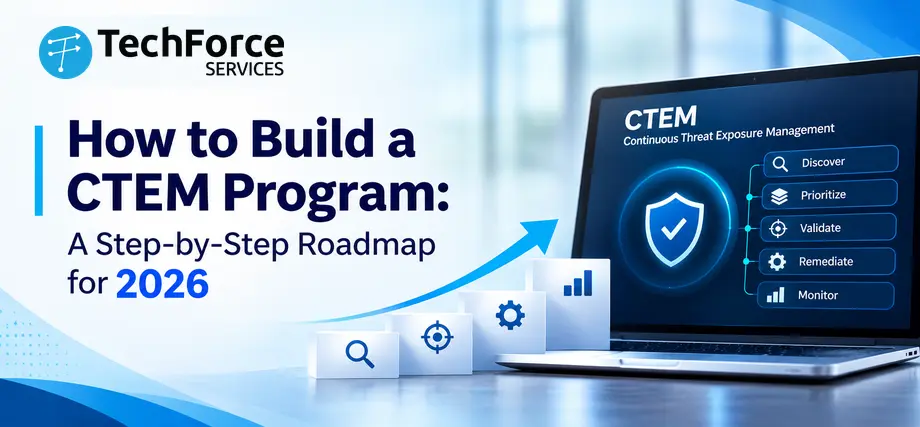
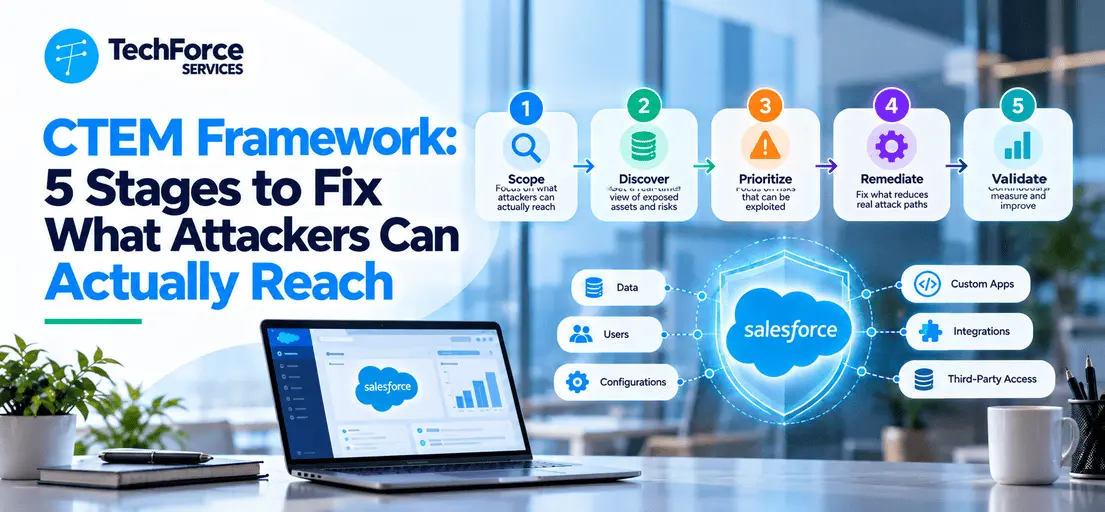
The CTEM framework runs on five connected stages. Each one answers a single question and hands a clear output to the next.
Stage | Core question | Key output |
1. Scoping | What must we protect? | Agreed scope and success metrics |
2. Discovery | What is exposed? | Evidence-backed exposure register |
3. Prioritisation | What matters most? | Short ranked fix list with deadlines |
4. Validation | Can attackers really exploit it? | Proof of exploitability or control success |
5. Mobilisation | Who fixed it, and did it work? | Closed exposures and a risk trend report |
How Each Stage of the CTEM Framework Works
Stage 1: Scoping
Start with business services, not asset lists. Pick one slice, such as internet-facing apps or your SaaS estate, and name the crown-jewel systems behind it. Agree on one success metric, like days to fix exposed critical systems. Invite owners from IT, cloud and the business so decisions stick later.
Watch out: Trying to scope everything at once. A narrow first cycle teaches more than a broad one.
Stage 2: Discovery
Discovery builds a live view of what an attacker could see. Attack surface management finds forgotten domains, shadow IT and open services. Add cloud misconfigurations, weak identities and leaked credentials, then map attack paths to the real-world adversary techniques catalogued in MITRE ATT&CK. The output is an exposure register with an owner for every item.
Watch out: Stale inventories that nobody refreshes.
Stage 3: Prioritization
Severity scores alone create noise. Rank each exposure using exploit likelihood, asset value, reachability and any controls that already reduce the risk. A critical flaw on an isolated test server can wait, while a moderate one on a public login page cannot. The output is a short list with realistic deadlines. Note why each item ranks where it does, so teams trust the order.
Watch out: Treating every high score as urgent.
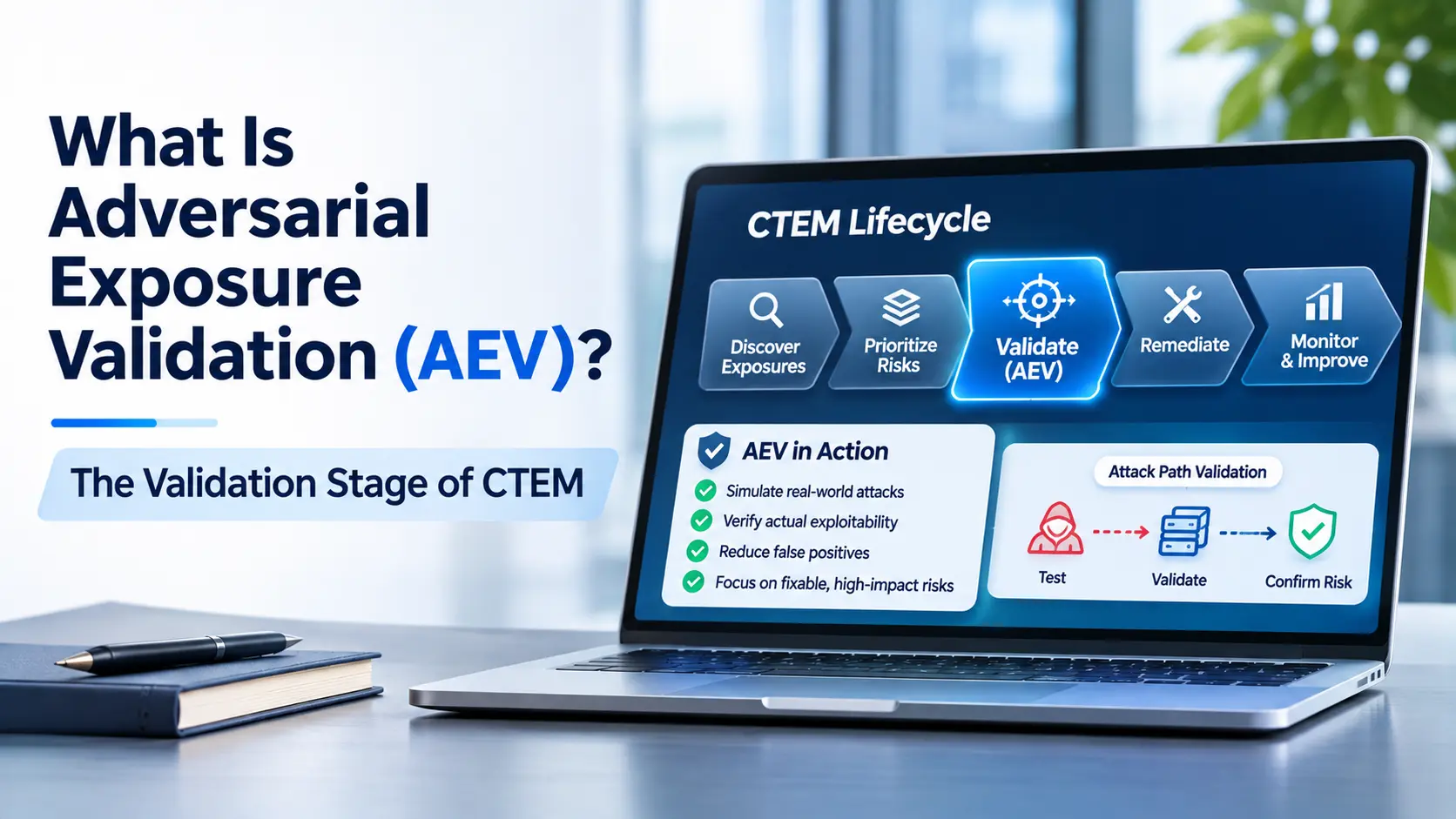
Stage 4: Validation
Security validation answers the question scanners cannot: would this really work against us? Use breach and attack simulation, purple team exercises or targeted tests to confirm exploitability, check that detections fire, and verify that fixes held. Keep every test scoped and safe, with clear rules of engagement. This stage turns opinions into evidence.
Watch out: Skipping it because it feels optional. It is where the framework earns trust.
Stage 5: Mobilization
Findings only matter once they are fixed. Send validated items to owners through your ticketing workflow with context, evidence and a deadline. Agree service levels up front, such as days to fix by priority. Govern exceptions openly, and report falling risk rather than tickets closed. Lessons then feed the next round of scoping, which keeps your exposure management program improving.
Our whitepaper explains how to validate security controls against real attack techniques.
Watch out: Throwing findings over the wall to IT.
Where Vulnerability Management Fits in the CTEM Framework
Vulnerability management does not disappear. It becomes one input to discovery and prioritisation, supplying scanner data for known assets. Attack surface management widens that view to unknown assets, while security validation proves which findings are real. Together, they let the CTEM stages work as one loop instead of three separate projects.
5 Mistakes That Stall a CTEM Program
- Buying another tool and calling it a program.
- Scoping the whole enterprise in the first cycle.
- Skipping validation to save time.
- Reporting findings instead of reduced risk.
- Leaving remediation owners out of the planning.
How to Launch Your First Cycle in 30 Days
- Week 1: choose one scope and one success metric.
- Week 2: build the exposure register.
- Week 3: rank and validate the top ten items.
- Week 4: assign fixes and report the trend.
Keep the scope small enough that one team can own every step. Then map the results to the NIST Cybersecurity Framework 2.0 so auditors and executives recognise the outcomes.

Key Takeaway
The CTEM framework works because it repeats. Each cycle sharpens scope, improves visibility and shortens fix times. Start small, measure honestly and repeat the cycle. Nothing here requires replacing your current tools. If you want expert help building your first loop, see how TechForce runs these programs or request a free assessment for your own environment.
FAQs
What is CTEM?
CTEM stands for continuous threat exposure management. It is a five-stage program that continuously finds, ranks, tests and fixes the exposures most likely to harm your business.
What are the five stages of the CTEM framework?
Scoping, discovery, prioritisation, validation and mobilisation. Each stage feeds the next, and the results of mobilisation sharpen the following round of scoping.
Is CTEM a tool or a program?
CTEM is a program. Tools support it, but the value comes from the repeating process, clear ownership and measured outcomes, not from any single product.
How long does one CTEM cycle take?
A narrow first cycle can take about a month. Later cycles run faster because scope, ownership and test cases are already in place.
Which metrics show CTEM is working?
Track time to fix validated exposures, the share of critical-path exposures closed within deadline, and detection coverage against tested techniques. Falling trends matter more than totals.