Overview
- Only 16% of organizations have operationally implemented a CTEM program — despite 87% recognizing its urgency.
- CTEM replaces reactive vulnerability scanning with a continuous five-stage exposure management cycle.
- EPSS scoring and breach and attack simulation help teams focus on what attackers will actually exploit.
- A 30/60/90-day roadmap makes building a CTEM program practical for security teams of any size.
- Organizations running mature CTEM programs report up to 66% fewer breaches and significantly lower MTTR.
Security teams don’t have a visibility problem. They have a prioritization problem.
In 2025 alone, over 40,000 new CVEs were published — roughly 130 every single day. Scanners run constantly. Tickets pile up. Yet breaches keep happening, often through exposures that were already known.
The problem isn’t finding vulnerabilities. It’s knowing which ones attackers will exploit — and closing them first.
That’s precisely what a CTEM program is built to solve. This step-by-step roadmap covers everything from governance and the five-stage framework to a practical 90-day implementation plan.
What Is a CTEM Program?
A CTEM program — short for continuous threat exposure management — is a structured, ongoing security operating model that continuously identifies, prioritizes, validates, and reduces your organization’s most exploitable risks.
Unlike one-time assessments or quarterly scans, threat exposure management treats security as an always-on cycle aligned to real-world attacker behavior and business impact.
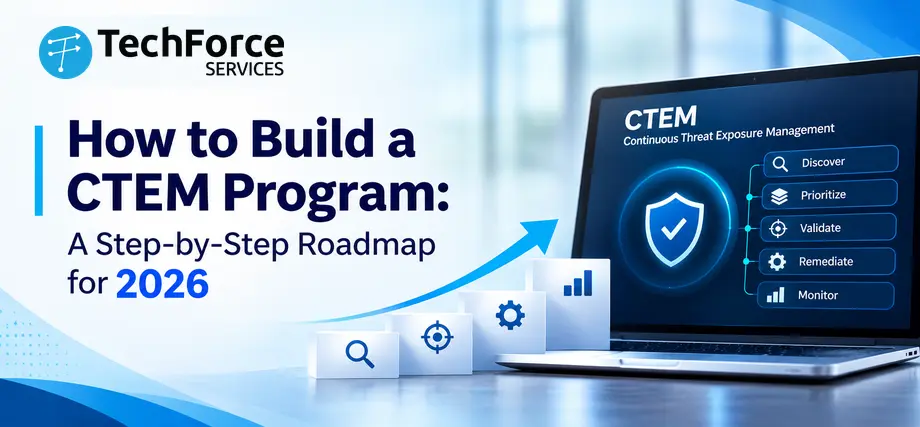
The CTEM framework and KnightGuard Platform follows five interconnected stages: Scoping → Discovery → Prioritization → Validation → Mobilization. Each stage feeds directly into the next, creating a continuous loop of measurable risk reduction.
CTEM vs Vulnerability Management: Why the Shift Matters
Traditional vulnerability management ranks CVEs by CVSS score. But CVSS measures theoretical severity — not real-world exploitability. The result is a program that generates noise instead of action.
CTEM vs vulnerability management isn’t a debate between two competing approaches. It’s the evolution from a CVE-centric checklist to a business-aligned, continuously validated exposure program.
- Scope: VM covers known software CVEs. CTEM covers the full attack surface — CVEs, misconfigurations, cloud posture gaps, identity risks, and shadow IT.
- Prioritization: VM uses CVSS. CTEM uses exploitability, attacker reachability, and business impact.
- Validation: VM assumes findings are exploitable. CTEM confirms it through breach and attack simulation.
- Cadence: VM is periodic. CTEM is continuous.
Read our in-depth guide: CTEM vs Vulnerability Management
Vulnerability management remains a critical input to a CTEM program — but it cannot carry the full weight of modern exposure management on its own.
The 5 Stages of the CTEM Framework
The CTEM framework runs as a repeatable cycle. Here’s how each stage works in practice.
Stage - 1: Scoping — Define What You're Protecting
Start with your crown jewel assets — the systems whose compromise would cause the greatest business damage. Resist scoping everything at once; broad scope leads to stalled programs.
Map the assets, identities, and dependencies supporting your defined scope. This becomes the boundary for your first full CTEM cycle. Expand only after completing it.
Stage - 2: Discovery — Surface Every Exposure
Discovery goes far beyond your known asset inventory. It should capture shadow IT, unmanaged cloud resources, open ports, expired certificates, and identity misconfiguration across your scoped environment.
This is where exposure management begins to differentiate itself from traditional scanning. TechForce Services provides complete internal and external attack surface discovery that gives your CTEM program an accurate, continuously updated baseline to build on.
Stage - 3: Prioritization — Focus on What Attackers Will Actually Use
Replace CVSS-only scoring with EPSS scoring — the Exploit Prediction Scoring System. EPSS calculates the real-world probability of a vulnerability being exploited within 30 days.
Layer EPSS scoring with asset business criticality, attacker reachability, and active threat intelligence feeds. The CISA Known Exploited Vulnerabilities Catalog is a reliable, free feed that validates which vulnerabilities are actively weaponized in the wild.
This approach narrows thousands of raw findings down to the 3–5% that represent genuine, actionable business risk.
Stage - 4: Validation — Confirm What's Genuinely Exploitable
Prioritization tells you what to investigate. Validation tells you what’s actually dangerous.
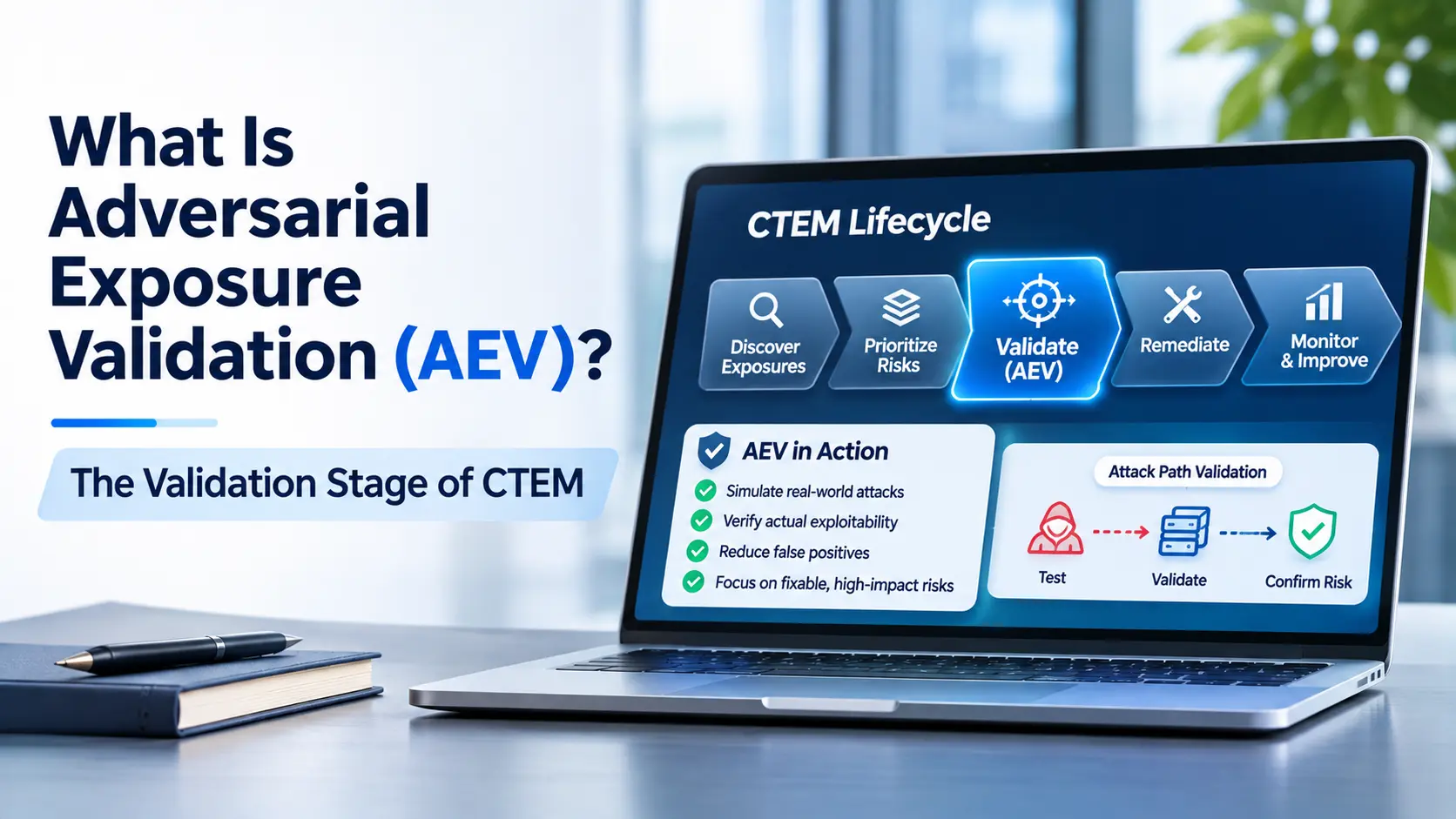
Breach and attack simulation (BAS) and automated penetration testing confirm whether attack paths are genuinely reachable and whether existing security controls block them. The MITRE ATT&CK Framework provides the adversary simulation playbook most mature CTEM validation programs use.
TechForce’s continuous penetration testing services integrate directly into this validation stage, delivering ongoing adversarial testing aligned to your specific business risk profile.
Stage - 5: Mobilization — Turn Findings Into Fixed Exposures
Mobilization routes validated findings to the right teams — IT, development, cloud operations — through the ticketing workflows they already use. It includes SLA tracking, cross-team ownership, and executive-level dashboards.
Without a structured mobilization process, even the most perfectly prioritized CTEM findings will remain unresolved. This stage is where security effort translates into measurable risk reduction.
Your 30/60/90-Day CTEM Program Roadmap
Operationalizing a CTEM program doesn’t require a full security transformation overnight. This phased roadmap gets your first cycle running in 90 days.
Days 1–30 — Foundation
- Secure executive sponsorship
- Identify 3–5 crown jewel assets
- Document current MTTR baseline
- Integrate existing SIEM, EDR, scanners
- Engage TechForce’s advisory team for governance structure
Days 31–60 — Discovery
- Complete attack surface inventory
- Implement EPSS scoring in workflow
- Build risk-ordered remediation backlog
- Automate tickets for top-priority findings
- Define SLA ownership by team
Days 61–90 — Validation
- Run breach and attack simulation
- Establish cross-team remediation SLAs
- Launch executive exposure dashboard
- Review cycle results and expand scope
- Set cadence for the next CTEM cycle
CTEM Tools: What Each Stage Requires
No single vendor delivers all five stages of a CTEM program. You need a purpose-built, integrated stack aligned to your environment.
CTEM Stage | Tool Category | Example Platforms |
Scoping | Asset Inventory / CMDB | ServiceNow, Axonius |
Discovery | EASM / CAASM | Censys, Runzero, CyCognito |
Prioritization | Vuln Prioritization + EPSS | Nucleus Security, Vulcan Cyber |
Validation | BAS / Pen Testing | Pentera, SafeBreach, Cymulate |
Mobilization | Ticketing & Reporting | Jira, ServiceNow, custom dashboards |
Explore TechForce’s managed security services to build a vendor-neutral CTEM technology stack tailored to your organization’s size and risk profile.
Security Posture Management: CTEM Metrics That Matter
Effective security posture management requires measurable proof of progress — not just a longer list of found vulnerabilities. Track these core CTEM KPIs each cycle.
- Mean Time to Remediate (MTTR)
Is it decreasing cycle over cycle? This is your headline metric.
- Exploitable Exposure Count
Validated risks only — not raw scan findings from every tool.
- Attack Surface Reduction
Month-over-month decrease in exposed and unmanaged assets.
- BAS Control Effectiveness Rate
What percentage of simulated attacks are blocked by existing controls?
3 CTEM Implementation Mistakes to Avoid
Mistake 1 — Starting with Too Broad a Scope
Teams that try to cover every asset from day one stall at Stage 1. Start with one crown jewel, complete one cycle, and expand from there. Narrow scope drives faster, more demonstrable results.
Mistake 2 — Relying Solely on CVSS for Prioritization
CVSS scores measure severity in isolation. Without EPSS scoring, attacker reachability, and business context layered in, your team will over-patch low-risk findings while missing what actually matters.
Mistake 3 — Treating Mobilization as an Afterthought
Mobilization must be designed into your program from day one — not bolted on at the end. Findings without remediation workflows are just documentation. They don’t reduce risk.

Ready to Build Your CTEM Program?
A CTEM program is not a product you purchase — it’s a discipline you build, one cycle at a time. The organizations pulling ahead in 2026 are those treating continuous threat exposure management as an ongoing operational discipline, not a quarterly project.
Start with one crown jewel asset. Run one full cycle. Measure the outcome. Then expand.
Conclusion
A CTEM program isn’t a one-time project — it’s a new way of working. Start with a focused scope, validate what’s truly exploitable, and fix what matters most. Run the cycle again. Each iteration makes your security posture stronger, your team faster, and your risk more manageable. The organizations winning at security aren’t finding more vulnerabilities — they’re fixing the right ones, continuously.
FAQ
What does CTEM stand for in cybersecurity?
CTEM stands for Continuous Threat Exposure Management — a five-stage security operating model that continuously identifies, prioritizes, validates, and remediates the exposures your organization’s attackers are most likely to exploit.
How is a CTEM program different from vulnerability management?
Vulnerability management focuses on known CVEs in known assets, sorted by CVSS score. A CTEM program covers the full attack surface — including misconfigurations, identity risks, cloud posture gaps, and shadow IT — and prioritizes real-world exploitability and business impact, not just severity.
What is EPSS scoring and why is it critical for CTEM?
EPSS (Exploit Prediction Scoring System) calculates the probability that a specific vulnerability will be exploited in the wild within 30 days. CTEM programs use EPSS scoring alongside asset criticality and threat intelligence to cut thousands of raw findings down to the small percentage that represents genuine, actionable risk.
What is breach and attack simulation (BAS) in a CTEM program?
Breach and attack simulation (BAS) uses automated tools to safely replicate real-world adversary techniques against your live environment. In the CTEM validation stage, BAS confirms whether prioritized attack paths are genuinely reachable, and whether your existing controls actually stop them.
How long does it take to implement a CTEM program?
A foundational CTEM program can be operational within 90 days using the roadmap in this guide. Full maturity — covering automated validation, cross-team mobilization workflows, and executive-level security posture management reporting — typically takes 6 to 12 months depending on your existing security stack and team size.