Introduction
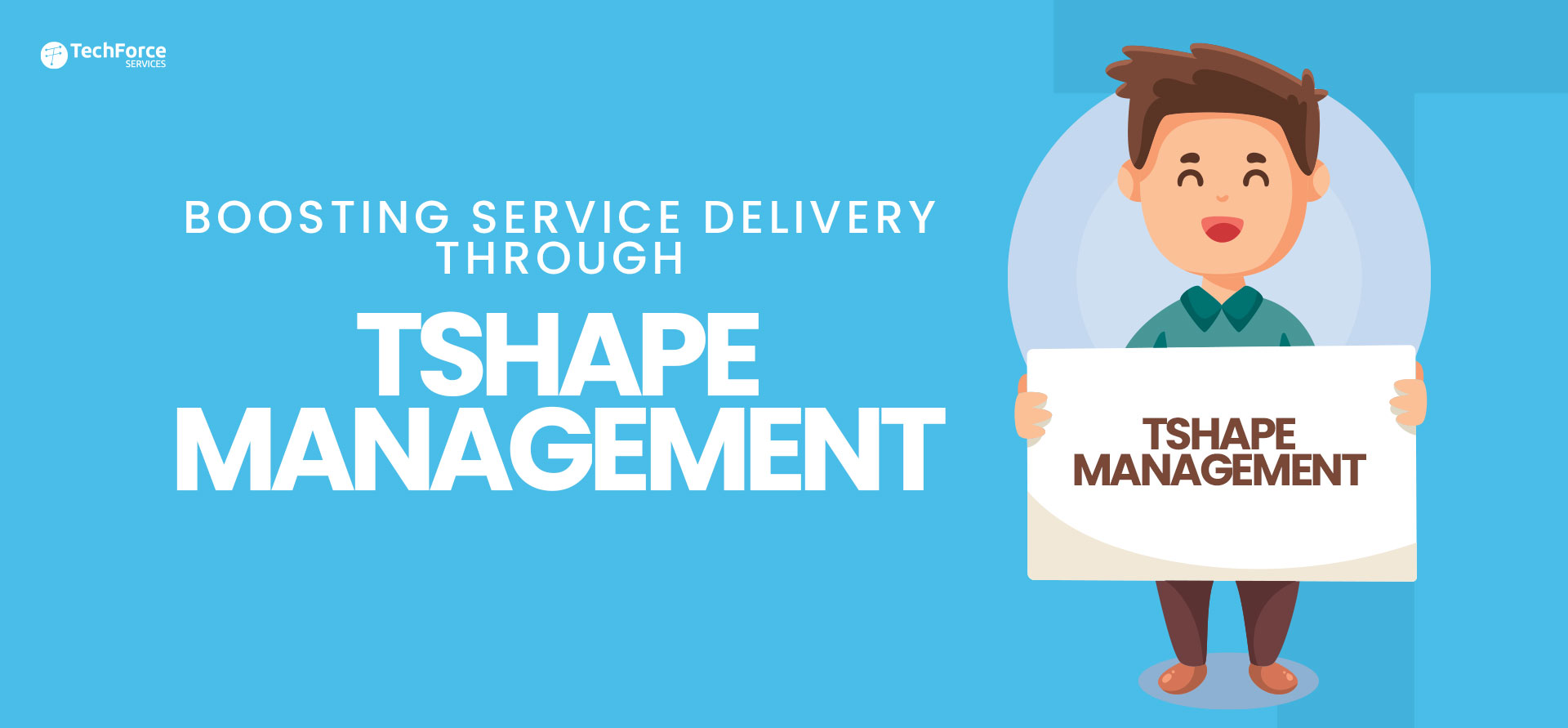
In today’s complex service environments, managing multifaceted projects and delivering high-quality results requires a unique blend of expertise. With the increasing demand for cross-functional collaboration, businesses need a good leadership style who can dive deep into specific fields while bridging knowledge gaps across different areas. Enter the T-shaped manager – a professional who combines specialized knowledge (depth) with a broad range of skills (breadth). The concept of Tshape management has gained popularity for its potential to foster collaboration, adaptability, and innovation. In this blog, we’ll explore how adopting T-shaped management principles can help businesses effectively manage complex service delivery.
What is T Shape Management?
The theory of T shape management was first introduced by Hansen and Oetinger in 2001. People are the most valuable resource in any organization. Collaborative and innovative managers play a crucial role in keeping organizations competitive. This type of manager is often described as a “T shaped skills” manager. The “T” symbolizes both depth (the vertical line, representing specialized expertise) and breadth (the horizontal line, representing diverse knowledge). However, we have yet to explore how this type of manager is created. I propose that a manager’s development is shaped by the organization, which can take actions to build a manager’s capacity to maintain productivity.
T-shaped managers are especially valuable in service delivery environments where complex projects require coordination across multiple functions, such as IT, customer service, and product development. Their ability to understand the intricate details and the broader organizational goals makes them instrumental in achieving seamless service delivery.
The Role of T-Shaped Managers in Complex Service Delivery
Effective service delivery often demands more than just technical expertise; it requires the ability to communicate, collaborate, and strategize across departments. Here’s how T-shaped managers contribute to managing complex service delivery:
Enhanced Cross-Functional Collaboration
With both deep knowledge and a broad understanding, T-shaped managers are well-equipped to engage with professionals across various disciplines. They can translate technical jargon into actionable insights for other teams and vice versa. This communication bridge allows T-shaped managers to lead cross-functional teams effectively, enabling faster decision-making and reducing misunderstandings.
Strategic Thinking and Adaptability
While specialized knowledge is crucial for handling the technical aspects of service delivery, complex projects require a strategic perspective to anticipate challenges and adapt to changes. T-shaped managers bring this adaptability, as their broader understanding of different functions allows them to adjust strategies and resource allocations quickly in response to new information.
Increased Productivity and Efficiency
T-shaped managers streamline workflows by leveraging their broad-based knowledge and deep expertise. They can identify overlaps, eliminate redundancies, and optimize processes across departments. Their insight into both tactical execution and overall service delivery strategies ensures efficient use of resources, helping teams meet deadlines and quality standards consistently.
Developing T-Shaped Managers for Service Delivery Success
Creating T-shaped managers within an organization involves intentional development strategies, including skills training, mentorship, and exposure to cross-functional projects. Here are some approaches to fostering T shaped skillset capabilities in your talent management team:
Encourage Cross-Disciplinary Learning
Provide managers with opportunities to learn about areas outside of their specialization. This could be through formal training programs, job rotations, or shadowing colleagues in different roles. Cross-disciplinary learning broadens their perspective, enabling them to understand how each function contributes to overall service delivery.
Promote Collaborative Problem-Solving
T-shaped managers thrive in environments that encourage teamwork and collective problem-solving. Establish regular forums or meetings where managers from different departments can discuss challenges and brainstorm solutions. It helps in leadership development. These sessions allow T shaped skills to leverage their broad expertise to generate innovative solutions.
Offer Strategic Mentorship
Pair managers with mentors who have strong T shaped skills, especially those with experience in both technical and strategic aspects of service delivery. Mentorship from seasoned leadership development helps aspiring T-shaped managers develop their breadth of knowledge and refine their ability to think strategically about service delivery.
Little T vs. Big T: Distinguishing Levels of T-Shaped Expertise
Not all T-shaped managers are the same; they can vary in the extent of their breadth and depth according to their t shaped skillset. Understanding the difference between “Little T” (LtMs) and “Big T” (BTMs) managers can help organizations better leverage their unique skills.
- Little T-Shaped Managers (LtMs): These managers have deep expertise in a single area and limited cross-functional experience. They are highly skilled in tactical tasks but may lack the strategic insight of a broader perspective. LtMs are ideal for roles that require focused expertise but still benefit from some level of collaboration with other departments.
- Big T-Shaped Managers (BTMs): BTMs, on the other hand, have significant tactical depth in one area but also possess a comprehensive understanding of multiple functions. They are capable of both managing technical tasks and strategically aligning diverse functions. BTMs are particularly effective in complex service delivery roles, where they can coordinate across departments and drive the organization toward unified objectives.
Both types of T-shaped managers have valuable roles to play in complex service delivery. LtMs ensure that specific tasks are executed with precision, while BTMs provide strategic leadership style and facilitate collaboration across teams. A well-balanced team with both LtMs and BTMs can optimize both execution and long-term planning in service delivery projects.
Why Organizations Need T-Shaped Managers for Effective Service Delivery

Breaking Down Silos for Seamless Operations
T shape management plays a pivotal role in breaking down organizational silos. Their broad knowledge across functions allows them to connect departments that may otherwise operate in isolation, such as marketing, IT, and operations. By facilitating cross-departmental communication, T shape management skills create a more unified and efficient service delivery process with their leadership style, where everyone works toward shared goals rather than isolated objectives.
Driving Innovation and Continuous Improvement
T-shaped managers bring together ideas from various fields, creating an environment conducive to innovation. Their exposure to different functions allows them to identify trends, best practices, and unique problem-solving approaches that may not be obvious to specialists. This cross-pollination of ideas leads to continuous improvements in service delivery, enabling organizations to stay ahead of the competition.
Enhancing Customer-Centric Service Delivery
With their broad understanding of multiple business areas, T-shaped managers can see the full customer journey rather than just isolated touchpoints. This perspective helps them design and manage services that are more aligned with customer needs, from initial engagement through to post-service follow-up. This end-to-end focus enhances customer satisfaction and loyalty, critical for long-term success.
Improving Decision-Making with a Holistic View
T shaped skillset bring both depth and breadth to decision-making, allowing them to weigh both specialized insights and organizational goals. This holistic perspective leads to better, well-informed decisions that consider both technical aspects and strategic objectives. As a result, service delivery decisions are more aligned with the organization’s vision and resources.
Building Resilience and Flexibility in Service Delivery
T shape management skills adapts quickly to changes in the business environment due to their wide-ranging expertise. They are more resilient in the face of challenges, as they can step in to cover gaps in knowledge or resources. This flexibility helps organizations remain agile, making it easier to pivot service delivery processes when new demands arise, such as unexpected market changes or evolving customer needs.
Conclusion
The T-shaped manager is a powerful asset for organizations facing the challenge of managing complex service delivery. With their dual capabilities in depth and breadth, T-shaped managers can improve collaboration, drive strategic initiatives, and optimize workflows. By investing in the development of T shaped skills, companies can create a dynamic team that not only meets today’s complex service demands but also positions itself for future growth and adaptability. Embracing T shape management skills is more than a strategy; it’s a pathway to sustainable success in an increasingly interconnected world.