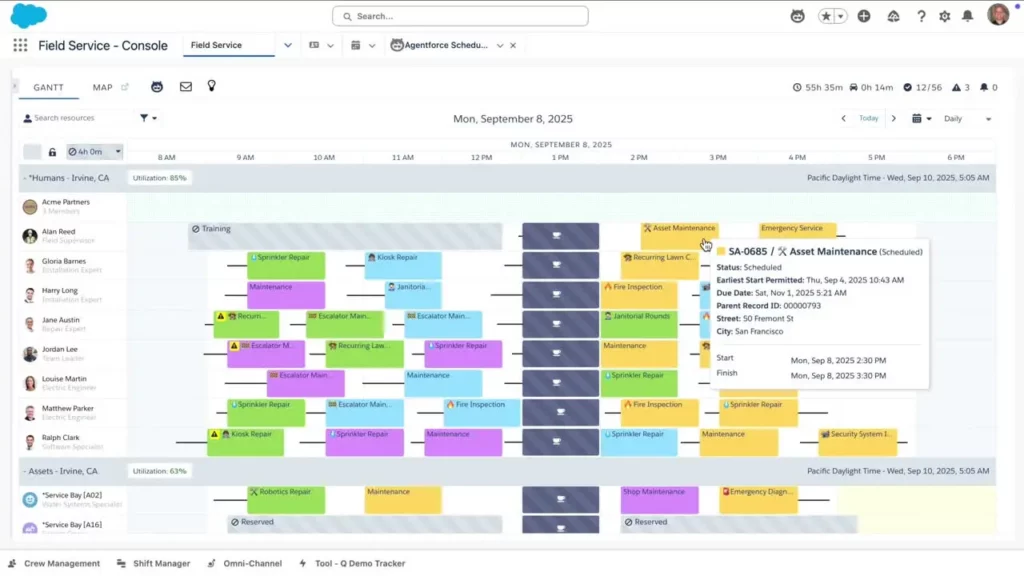
Get field crews to the right job, on time, with the right parts.
Built as the AI-first field service layer of Salesforce, Field Service and Operations (briefly branded Agentforce Field Service) connects scheduling, mobile technicians, dispatch, and assets into one system, so dispatchers schedule smarter, technicians spend less time driving, and customers stop chasing updates on when someone’s showing up.
Ready to see how it fits your operation?
11+
Years of Delivery Experience
4.9/5
AppExchange Rating
600+
Salesforce Certifications
500+
Projects Delivered
As a complete Salesforce Field Service management system, it connects work orders, mobile tools, assets, and AI agents into one place instead of a dozen disconnected tools that never quite talk to each other, one of the more complete field service management solutions built natively on a CRM rather than bolted onto one.
Jobs matched to the closest qualified technician automatically, not just the next free slot
Customers book, reschedule, or cancel appointments themselves, any channel, any time
Dispatchers ask plain-language questions to find schedule gaps or missing parts
Service-level agreement and appointment-window enforcement built in
Dynamic, job-specific forms with offline access that syncs the moment signal returns
On-site quoting, signature capture, and payment collection
Photo and asset-condition capture built into every job, not bolted on after
GIS map layers and low-code forms that change as jobs change
Full asset history visible before a technician steps on-site
Preventive maintenance plans and auto-generated work orders
Early warning on likely asset failures where the data supports it
Digitised work order lifecycle from creation through to debrief
Schedule gaps from cancellations or no-shows filled automatically
Pre-work briefs pulled directly from unified asset histories and prior visit notes
Post-job summaries drafted from technician notes, with human-in-the-loop approval guardrails before anything hits the customer
Dashboards covering first-time-fix rate, technician utilization, and asset availability in a single screen
Conversational analytics, so a manager can ask a question in plain language instead of exporting a spreadsheet
Remote video support that resolves some issues without sending a truck at all
Get one console showing technician skills, location, and availability instead of a whiteboard covered in sticky notes.
Get job details, checklists, and full asset history on their device before they even knock on the door.
Get first-time-fix rate, travel time, and utilization in one dashboard, queryable in plain language instead of a monthly export.
Get real-time appointment tracking and status updates instead of a call center guess about when someone’s showing up.
Get the same mobile access and job visibility as employed technicians, without a separate system to manage.
End-to-end setup on top of Service Cloud, including work order types, scheduling policies, service territories, and skill matrices.
Configuring the dispatcher console and the scheduling engine to cut drive time and lift first-time-fix rates.
Turning on and scoping agents for schedule-gap filling, pre-work briefs, and post-job summaries.
Mobile app rollout with offline support, job-specific checklists, and device management.
Moving off spreadsheets, standalone dispatch tools, or an older platform with full historical data carried across.
Connecting the platform to ERP, inventory, telematics, IoT sensors, and billing systems.
Asset tracking, preventive maintenance plans, and predictive asset service.
Remote video support and customer self-service booking configured and rolled out.
Ongoing admin support, release testing, and continuous improvement once the system is live.
Complex territory routing, compliance-driven maintenance cycles, asset-heavy service history.
Preventive maintenance scheduling tied to equipment uptime and warranty tracking.
High-volume dispatch, SLA enforcement, and technician certification management.
Simplify backend operations, automate repetitive admin tasks, and gain real-time visibility into workflows. AgentForce enables cross-functional efficiency through smart process automation.
Asset lifecycle tracking, predictive maintenance, and parts-availability-driven scheduling.
Choosing an implementation partner matters as much as choosing the platform itself. Here’s what’s behind the work:
Working on the platform since 2015, across field-heavy industries where downtime costs money.
Implementations, migrations, and optimisations shipped for organisations of every size.
Held across the team, covering Field Service, Service Cloud, integration, and platform architecture.
Rated 4.9 out of 5 on the Salesforce AppExchange by the customers we’ve delivered for.
The highest partner tier Salesforce awards, earned on delivery quality and customer satisfaction.
Agreed before work begins, so the budget you approve is the budget you pay.
Every consultant on your project holds live certifications on the products they’re configuring.
Once you’re live, our managed services team keeps the platform moving — release testing, admin support, and the next round of improvements.
Step 01
We map your current dispatch process, technician workflow, asset data, and the systems already in play.
Step 02
Work order types, scheduling policies, service territories, and skill matrices are designed around how your operation actually runs.
Step 03
The platform is configured, the mobile app set up, and Agentforce agents scoped and switched on.
Step 04
Asset history, customer records, and work order data move across, and the ERP, inventory, and billing connections go in.
Step 05
Dispatchers, technicians, and managers are trained on their own workflows before the switch, not after it.
Step 06
Post-launch support, release testing, and continuous improvement as the operation grows.
Client stories
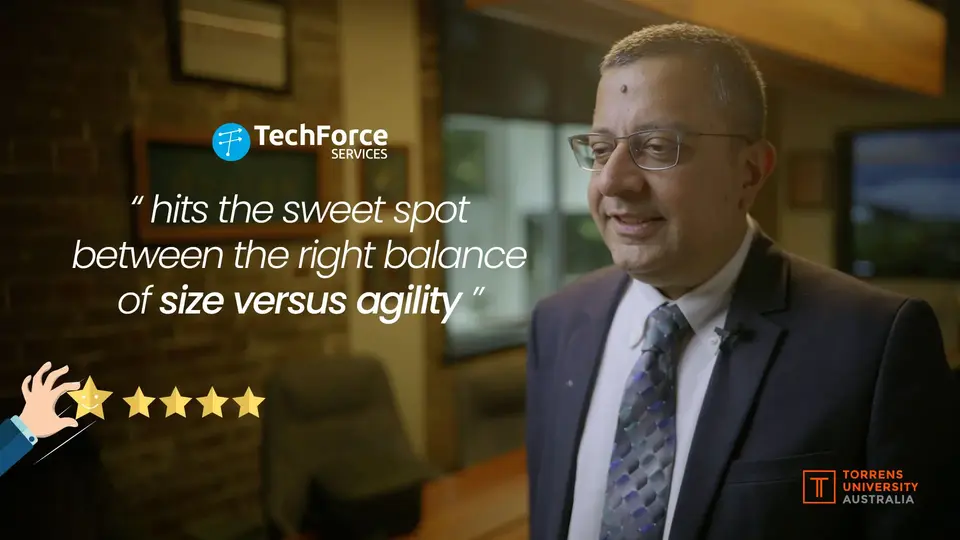
“TechForce hits the sweet spot between size versus agility and the amount of sustainability they provide through their resources. They have a low rate of churn, which is a good thing.”
Dr. Ashish Bharadwaj
Chief Information Officer (CIO), Torrens University Australia
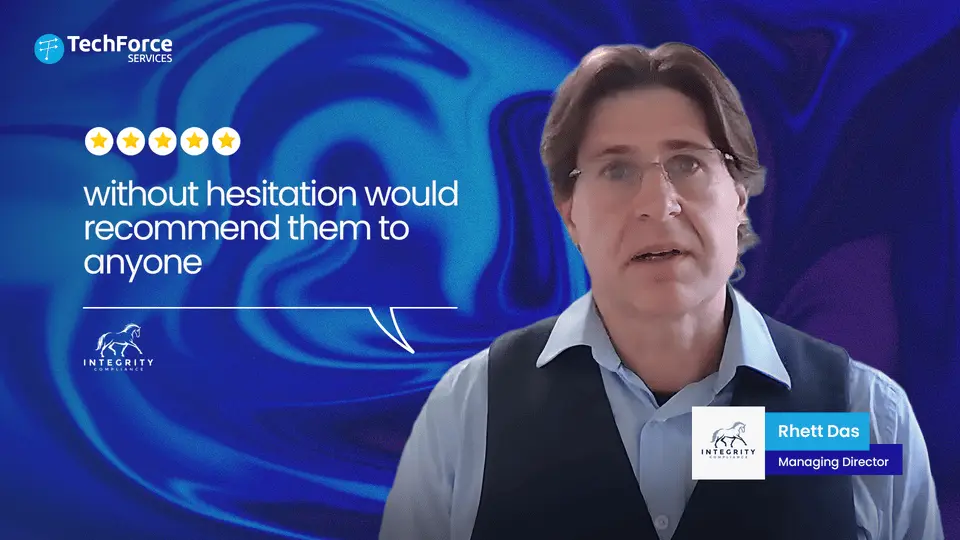
“Tech Force is definitely the best Salesforce developer that we’ve worked with; it’s a 10 out of 10. We’ve always been able to resolve anything or if we’ve hit an unexpected issue.”
Rhett Das
Managing Director, iCompliance
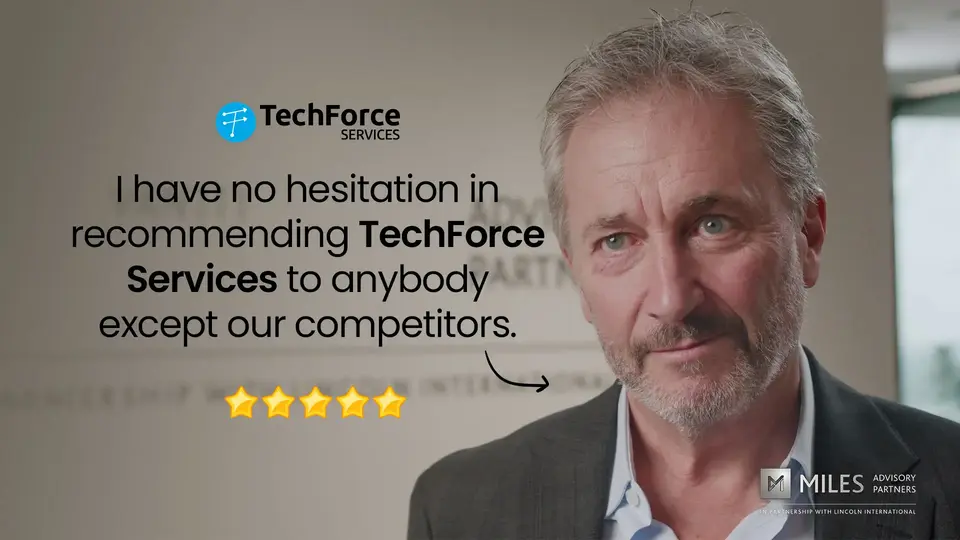
“Partnering with TechForce is the second best decision we’ve ever made, with the first being implementing Salesforce. I’d have no hesitation in recommending them to anybody, except our competitors.”
Tim Miles
Managing Director, Miles Advisory Partners

“When you start using a CRM like Salesforce, the data becomes three-dimensional. So you can click on something and find information several layers deep.”
Nick Lawson
Director, Campus Plus

“We were able to start looking forwards rather than needing to look back. We made smart decisions that saved us money, time, and effort—and we were able to open on the day we said we would.”
Andrew Cooper
CIO, College of Law

“TechForce gives you guidance, understanding, and insight, and they don’t make you feel silly in the process. If you’re looking for a team who makes scary things fun, that’s exactly who they are.”
Hessa Robinson
National Sales Manager, Modern Star
Case studies

Read the story →
Field Service FAQs
What is Salesforce Field Service and Operations?
It’s Salesforce’s platform for managing mobile workforces — scheduling and dispatching technicians, tracking assets, running work orders, and giving field teams what they need on their phones. It builds on Service Cloud and was previously known as Field Service Lightning.
Is this the same as Field Service Lightning?
Yes, it was renamed as Salesforce unified its tools under the Agentforce brand. Whether you know it as Agentforce for Field Service, Salesforce Field Service, or the older FSL name, it’s the same underlying platform, now with AI agents built in for scheduling and dispatch.
How long does a field service implementation take?
A single business unit typically runs 8–12 weeks. A multi-region rollout with contractor networks, ERP integration, and complex asset data usually takes 4–6 months. We scope the timeline during discovery, before you commit to anything.
Do I need Service Cloud first for Field Service implementation?
Field Service sits on top of Service Cloud, so you need that foundation in place. If you’re not on it yet, we implement both together rather than running two separate projects.
What integrations matter most for a field service rollout?
ERP and inventory are usually first — technicians need to know what parts are available before they’re dispatched. Billing comes next so completed jobs invoice automatically. Telematics and IoT sensor feeds follow for organisations moving toward predictive maintenance.
Talk to a certified Field Service consultant about your dispatch process, your technician workflow, and what a realistic rollout looks like.