Overview
- Strategic Platform Optimization: Discover how end-to-end CRM managed services maximize Salesforce ROI, accelerate user adoption, and maintain technical health.
- Support Model Alignment: Compare reactive, proactive, and predictive support models to choose the right operational framework for your business needs.
- Cost Efficiency & Scalability: Learn how partnering with a Salesforce Managed Services Provider lowers hiring overhead while giving on-demand access to certified experts.
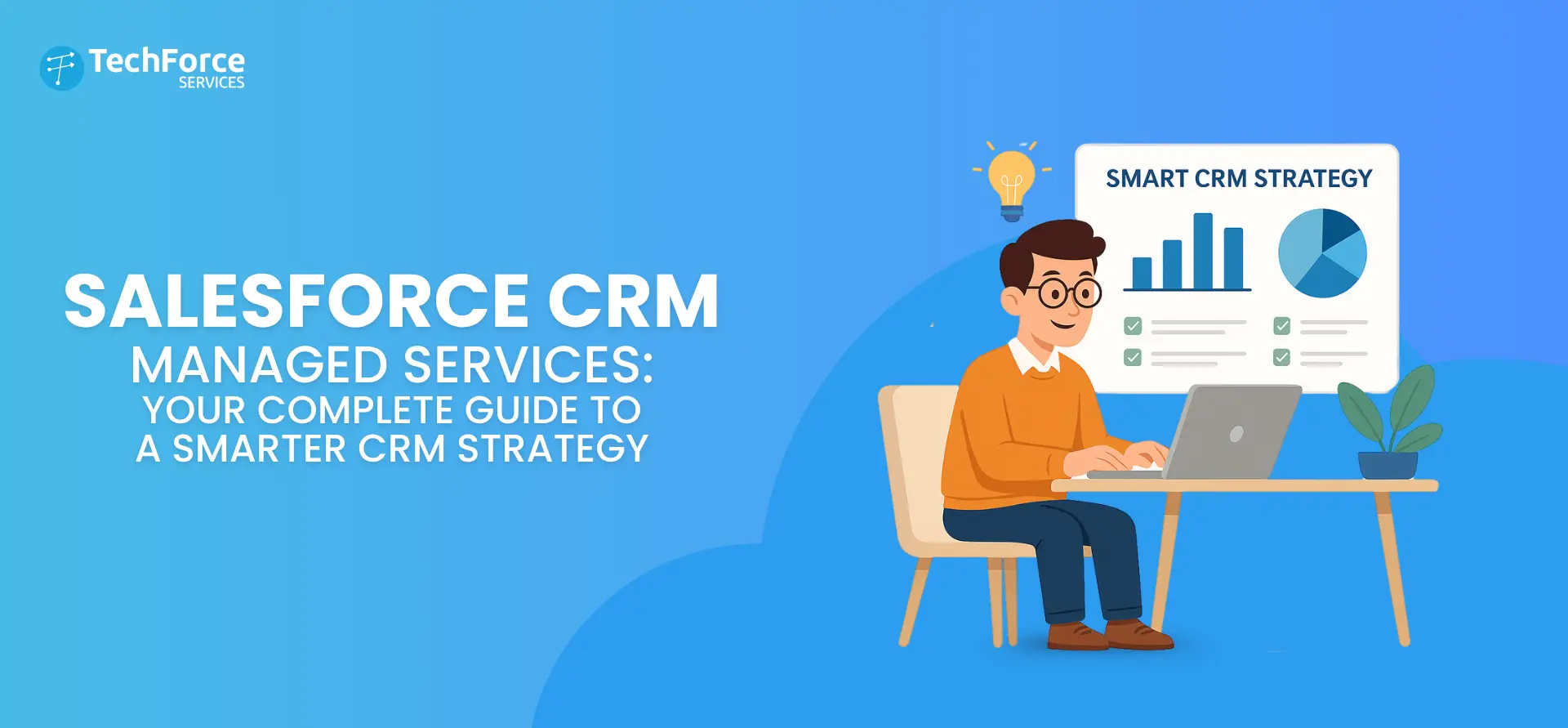
Customers today want fast, personal, and helpful service. To meet those expectations and stay ahead of the competition, businesses need more than just a basic CRM. They need Salesforce CRM managed services.
Salesforce is a powerful platform, but using it to its full potential takes expertise, regular updates, and strategic customization. That’s where managed services help. These services make sure you get the full value from your Salesforce investment. From setup and configuration to support and upgrades, they keep your CRM working the way your business needs.
What Are Salesforce CRM Managed Services?
Salesforce CRM managed services are expert services that trained professionals provide. The team of experts help companies manage, customize, and improve their Salesforce system. They take care of the full CRM journey—starting from setup to support, feature updates, system connections, and data protection.
Managed Services Providers (MSPs) have deep knowledge of the Salesforce ecosystem. They keep your Salesforce system always updated, scalable, and aligned with your growing business needs. You don’t need to build an expensive in-house team; instead, you can work with certified Salesforce professionals. They work proactively to keep your platform in top shape.
What is the primary role of CRM managed services?
CRM managed services provide continuous administrative, technical, and strategic expertise to maintain, secure, and scale a Salesforce ecosystem. This operational model prevents platform downtime, accelerates feature rollouts, and eliminates the overhead of managing a large internal technical staff.
Why Businesses Choose CRM Managed Services
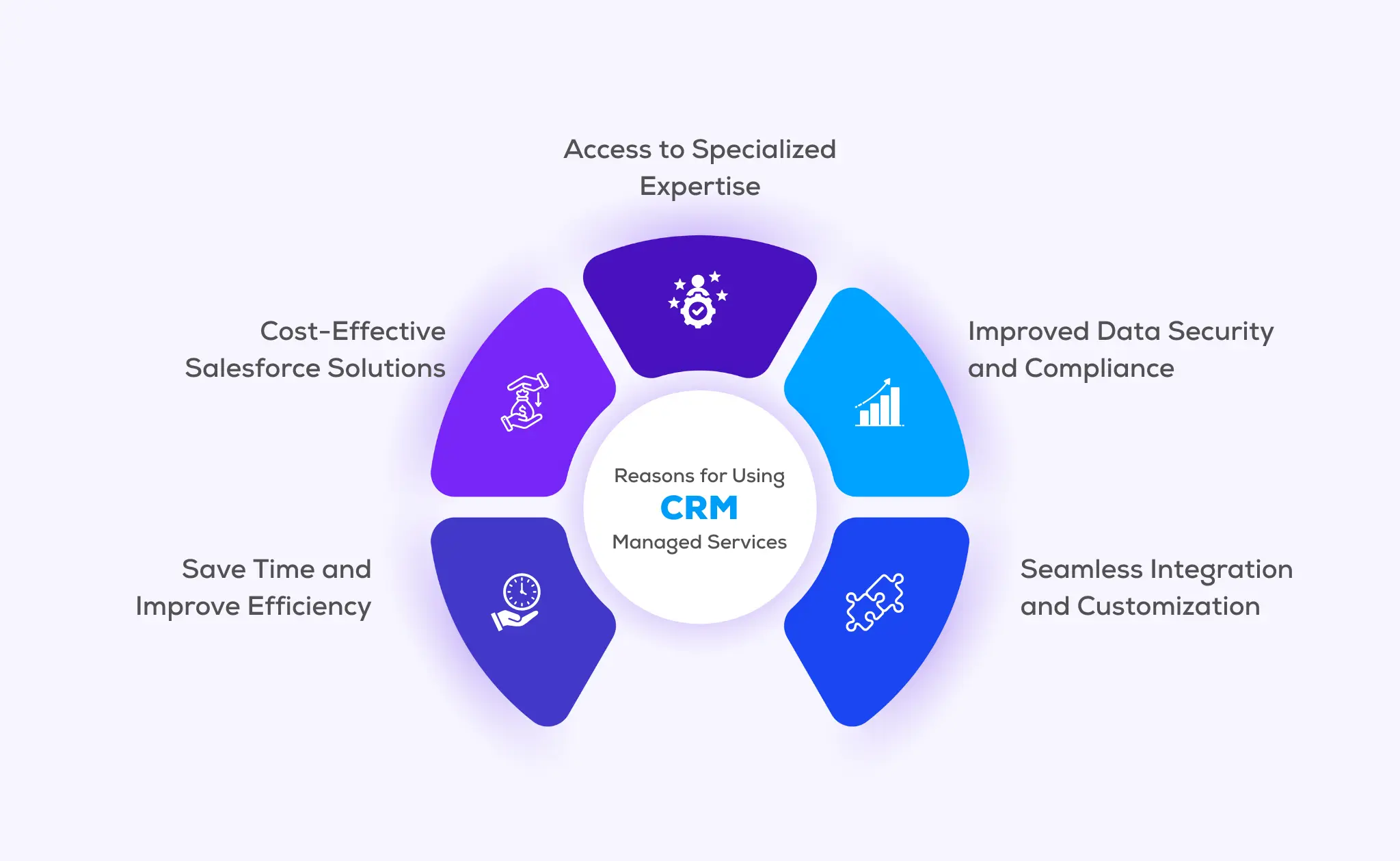
1. Save Time and Improve Efficiency
Managed services help make your Salesforce system more efficient and productive. Experts make sure your system is set up the right way, your workflows are smooth, and automation is used properly. This leads to:
- Less Manual Work: Tasks like data entry, lead management, and reporting are automated. This saves time and lets your team focus on more important work.
- Faster Processes: Streamlined workflows help your team respond quicker and serve customers better, which boosts overall productivity.
- Ongoing Improvements: These services include regular health check services and updates to make sure your Salesforce system grows with your business.
2. Cost-Effective Salesforce Solutions
Instead of hiring a full-time team to manage your Salesforce system, you can get expert help at a lower cost. Managed Services are a smart way to save money. These cost-effective services allow you to invest more in your business while still getting the Salesforce support you need.
- Scalable Services: These services grow with your business. You only pay for what you need, which helps avoid extra costs.
- Lower Overhead: Outsourcing means you don’t have to spend money on hiring, training, or managing a large in-house team.
- Fixed Costs: Most providers offer set pricing plans. This makes it easier to plan your budget and manage your spending.
3. Access to Specialized Expertise
Salesforce is a powerful platform with many features. With Managed Services, a team of experts who know Salesforce CRM and related tools thoroughly supports you. This provides several benefits:
- Expert Setup: Professionals handle your Salesforce setup using best practices, ensuring better performance than many in-house teams can achieve.
- Smart Advice: Consultants offer tailored advice that aligns with your business goals, helping you maximize Salesforce.
- Fast Problem-Solving: Experts quickly identify and resolve issues, minimizing downtime and keeping your system running smoothly.
4. Improved Data Security and Compliance
Today, keeping data safe and following legal requirements is crucial. Managed Services for Salesforce protect your company’s important data and stay in line with industry rules.
- Regular Updates: MSPs keep your Salesforce CRM and cloud tools updated with the latest security patches.
- Data Safety: They use strong security measures to prevent hacks and unauthorized access to your data.
- Regulatory Compliance: They ensure your system follows laws like GDPR and CCPA, reducing legal risks.
5. Seamless Integration and Customization
Managed Services make it easy to connect and customize your Salesforce system. It helps your Salesforce system work better, making sure you get the most value from your investment.
- System Integration: They connect Salesforce with your other tools, like ERP systems or marketing platforms, to create one smooth system.
- Custom Solutions: They adjust Salesforce to fit your business’s unique needs and workflows.
- Better User Experience: Customizations make Salesforce easier to use and more useful for your team.
Proactive, Predictive, and Reactive Support Models
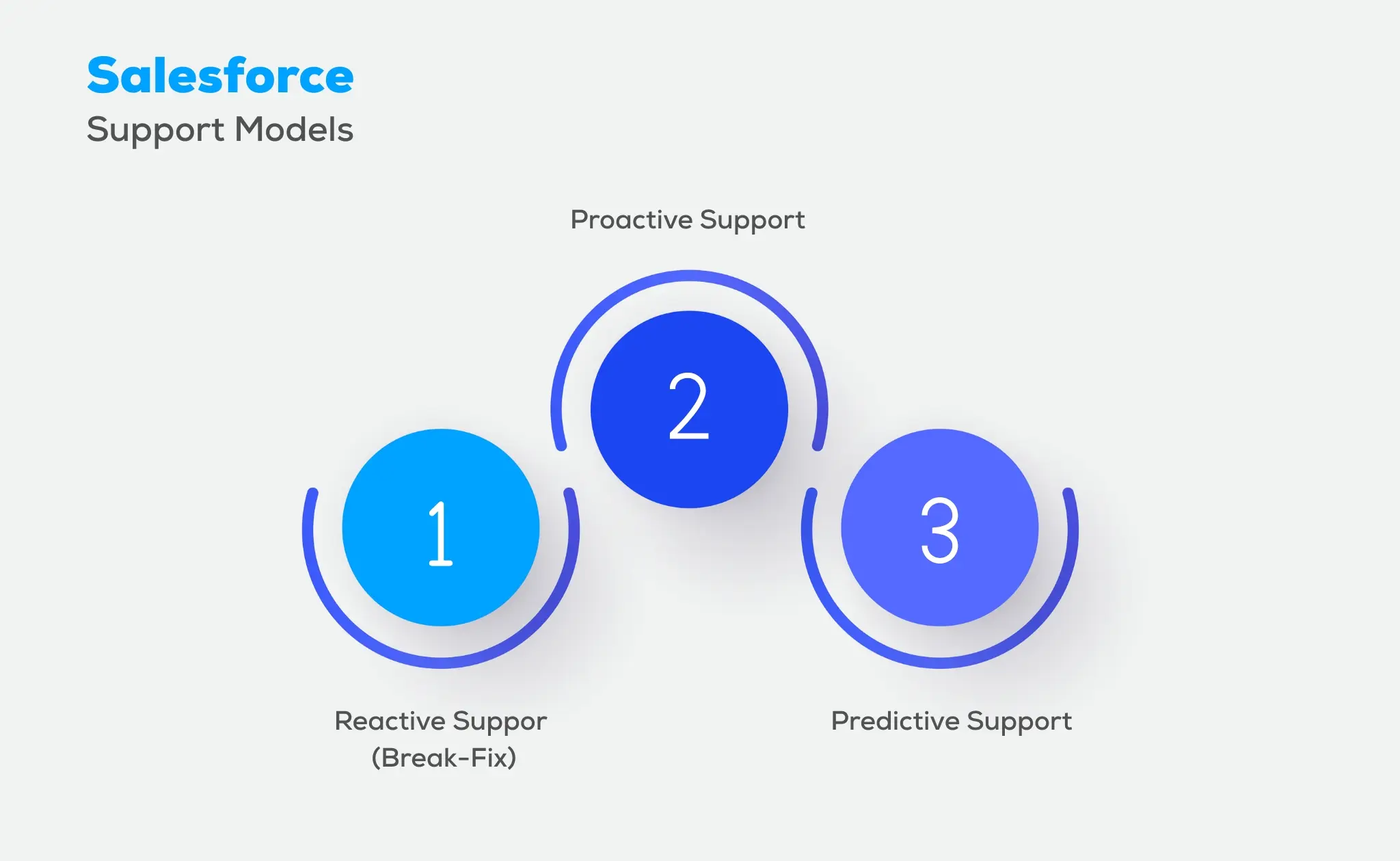
1. Reactive Support (Break-Fix)
What it is:
Reactive support means the support team only steps in after a customer reports a problem. This model is called “break-fix” because it waits for something to break before fixing it.
Example:
A customer contacts the support team after finding a bug in the software.
Pros:
- Easy to set up
- Focuses on current problems
Cons:
- Customers may get frustrated by delays
- Problems can affect business operations before they get fixed
- The same issues might happen again
- Support costs can go up over time
2. Proactive Support
What it is:
Proactive support means the support team watches systems closely and fixes problems before they become serious or affect customers.
Example:
The support team notices frequent errors in one part of the software and contacts users to offer help or release a fix. They might also send reminders about upcoming maintenance or software updates.
Pros:
- Reduces downtime
- Keeps customers happy
- Makes the support process more efficient
Cons:
- Needs tools and systems to watch for issues
- Takes more time and effort upfront to find and fix problems early
3. Predictive Support
What it is:
Predictive support is the most advanced model. It uses data and machine learning to guess what problems might happen in the future and stops them before they start.
Example:
The system studies how a customer uses the product and past support issues. It might be noticed that a customer uses the product less and could cancel soon. The team can reach out for help before that happens.
Pros:
- Keeps customers very satisfied
- Prevents downtime
- Uses support resources wisely by fixing problems early
Cons:
- Needs strong data tools and a good system to understand the data
What is the key difference between proactive and reactive CRM support?
Reactive support resolves system errors only after they cause business disruption, whereas proactive support continuously monitors system health to identify and fix issues before users are ever affected.
To understand how reactive help compares to ongoing proactive management, read our detailed breakdown on software support vs managed services
Key Features of CRM Managed Salesforce Services
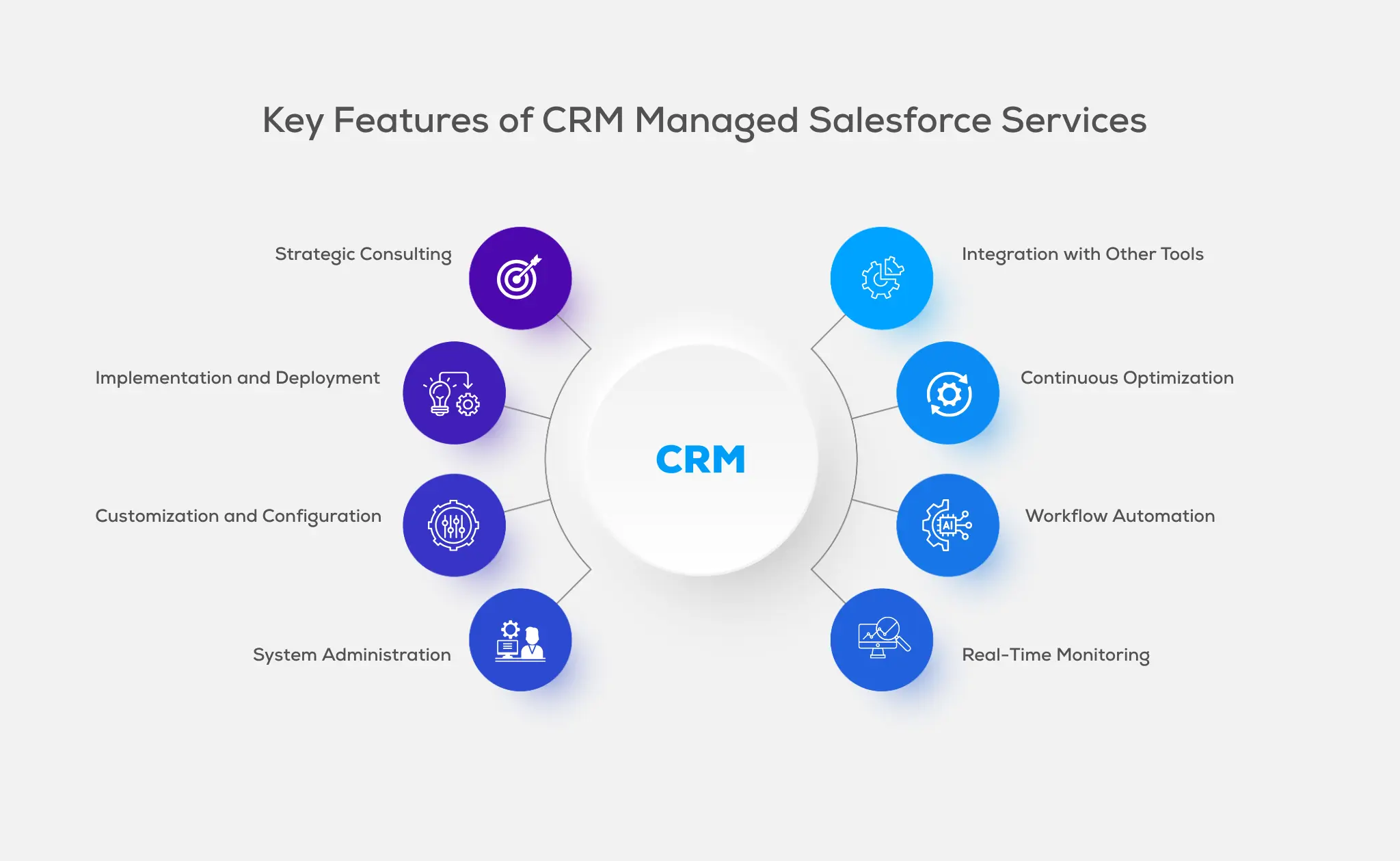
1. Strategic Consulting
Expert consulting services help plan your Salesforce setup, design custom solutions, and guide your long-term CRM strategy. This ensures that Salesforce supports your business growth, not slows it down.
2. Implementation and Deployment
Managed service providers roll out Salesforce in a way that fits your business goals. This includes setting up your instance, migrating data, and testing the system.
3. Customization and Configuration
Your business is unique. Managed services personalize your Salesforce with custom fields, dashboards, automation, workflows, and user interfaces.
4. System Administration
Providers handle daily administrative tasks like user roles, permission sets, system access, and backups to keep your CRM running smoothly.
5. Integration with Other Tools
Seamless integration with marketing platforms, ERP systems, and customer service tools is essential. Providers help build a connected ecosystem where data flows easily between systems.
6. Continuous Optimization
The service doesn’t stop after launch. Managed services include regular system evaluations to keep Salesforce running at peak performance.
7. Workflow Automation
Providers help automate workflows to match how your business operates. This frees up time for your staff and reduces errors.
8. Real-Time Monitoring
Through dashboards and alerts, managed services offer constant visibility into your system’s health and performance.
Choosing the Right Salesforce MSP
Here are the most important factors to consider when selecting a Salesforce CRM MSP:
- Proven Salesforce Expertise: Check certifications, years of experience, and industry knowledge.
- Flexible Service Plans: Look for packages that can scale with your business.
- Strong Consulting Capabilities: A good provider should offer strategic input, not just technical help.
- Reliable Support: Make sure they offer 24/7 assistance and quick response times.
- Security and Compliance: The provider should follow strict data protection and regulatory practices.
- Positive Client Reviews: Look for testimonials and success stories.
- Clear Pricing Models: Choose a provider with transparent and predictable costs.
Understanding the Costs and ROI
What Affects the Cost?
The cost depends on:
- The size and complexity of your Salesforce setup
- Number of users and departments
- Customization and integration needs
- Ongoing support and compliance
Why It’s Worth It
While managed services require upfront investment, the ROI is clear:
- Fewer internal hires
- Less downtime
- More accurate data
- Faster time-to-value
Conclusion: Your Path to a Smarter, Scalable CRM
Salesforce CRM Managed Services are not just support, they are strategic enablers too. MS providers help you transform Salesforce from a tool into a business accelerator. With proactive optimization, expert consulting, seamless integrations, and built-in security, you can unlock the full potential of your Salesforce ecosystem.
Whether you’re looking to reduce costs, increase productivity, improve compliance, or scale operations, a trusted Salesforce Managed Services Provider can help you get there.
Ready to take control of your CRM? Let’s Make Salesforce Work Better for Your Business!
At TechForce Services, we provide Salesforce Managed Services that are reliable, flexible, and tailored to your needs. Our certified experts help you:
- Launch Salesforce fast
- Customize your CRM to fit your business
- Keep your system running efficiently
- Stay compliant and secure